

Climate Justice Must Include Disability Justice
Climate change does not affect everyone equally. People with disabilities often face greater risks during climate-related emergencies due to inaccessible systems, limited transportation, communication barriers, and gaps in disaster planning. True climate justice must recognize and address these inequalities to ensure no one is left behind.
Why Climate Change Affects People with Disabilities Differently
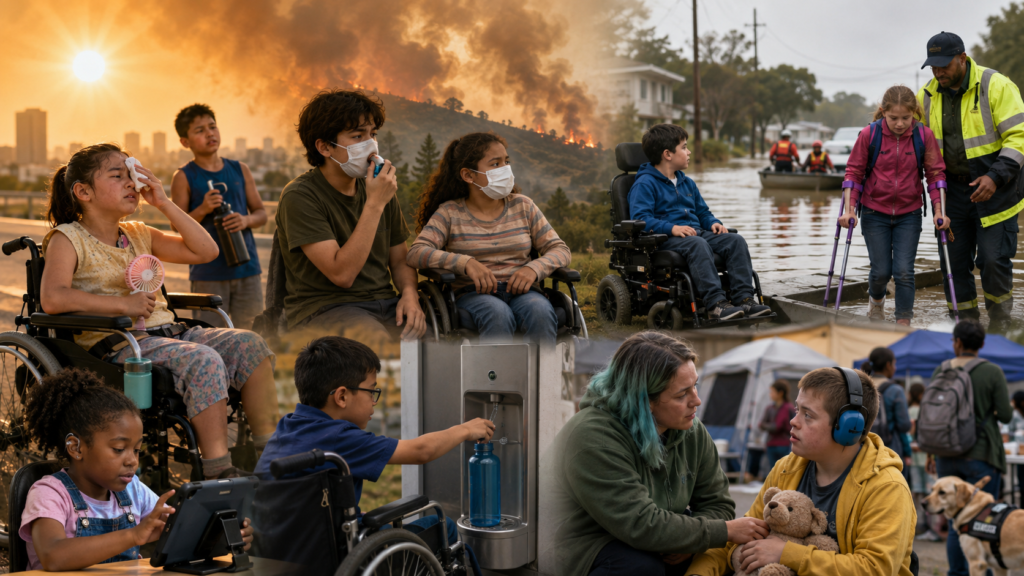
Extreme heat, flooding, poor air quality, and natural disasters can create additional barriers for people with disabilities. Many individuals rely on assistive devices, accessible transportation, medications, caregivers, or stable infrastructure that may become disrupted during emergencies. Without inclusive planning, climate crises can deepen existing inequalities.
Accessible Emergency Planning for Schools
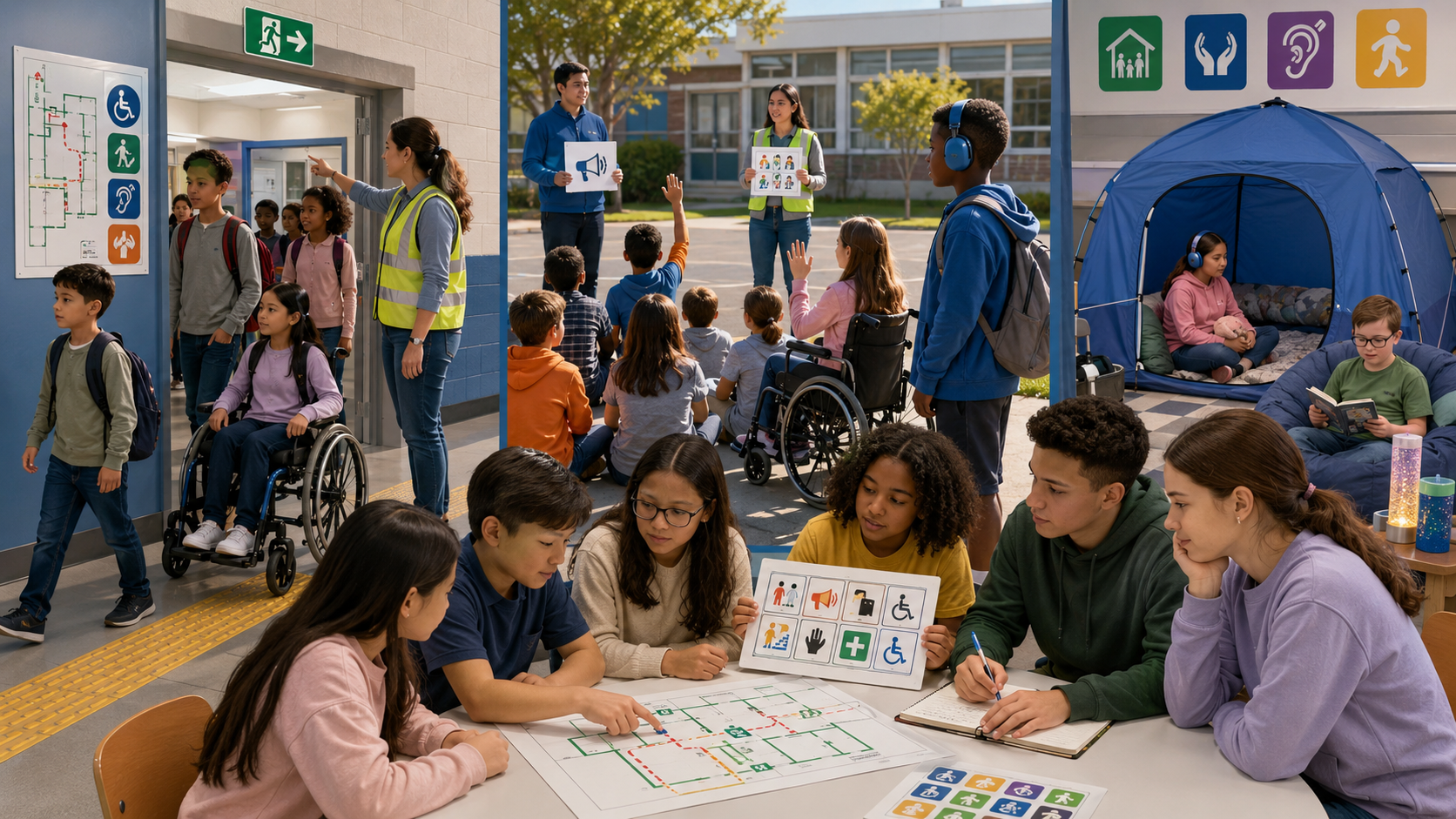
Schools play a critical role in protecting students during emergencies. Inclusive preparedness means ensuring evacuation plans, emergency alerts, shelters, and response systems are accessible to all learners, including students with physical, sensory, intellectual, and psychosocial disabilities.
Key priorities include:
- Accessible evacuation procedures
- Disability-inclusive disaster drills
- Visual and easy-to-understand emergency materials
- Safe and accessible shelter spaces
- Student-centered emergency planning
Barriers During Climate Emergencies
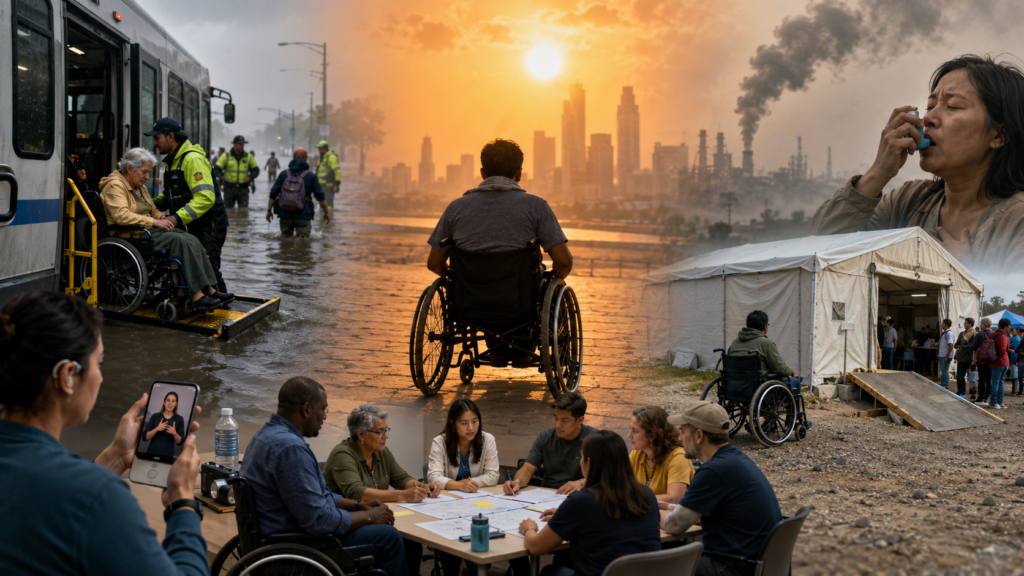
Climate-related events can intensify everyday accessibility challenges. Many disabled individuals experience:
– Unsafe transportation during evacuations
– Limited access to cooling spaces during heat waves, increased respiratory risks from poor air quality
– Communication barriers during emergencies
– Inaccessible relief centers and public services
– Addressing these barriers requires inclusive policies, universal design, and meaningful consultation with disabled communities.
Inclusive Climate Education Resources
Climate education should be accessible to every learner. Yasmin promotes educational resources that use inclusive language, accessible formats, and disability-inclusive perspectives to help students understand both environmental sustainability and social equity.
Inclusive climate education empowers young people to become advocates for resilient and equitable communities.